Key Takeaways
- Supply chain risk is now a finance problem. Disruptions cost mid-market companies an average of 4.4% of total revenue annually, and the old division of labor (CSCO owns operations, IT owns systems, finance owns the aftermath) no longer holds up.
- CFOs have shifted from reporters to risk strategists. Boards aren’t asking “what did we spend last quarter?” anymore; they’re asking “what’s our exposure if a key supplier goes down?” or “what happens to margins if tariffs rise 25%?”, questions that demand real-time intelligence, not quarterly retrospectives.
- Traditional systems only tell you what happened, not what’s about to happen. Point-in-time, disconnected data can’t get ahead of disruption, and that visibility gap is where margin quietly erodes (a 10% forecast miss alone can mean millions in excess inventory or stockouts).
- AI-powered platforms translate into three concrete finance outcomes. Fewer surprises (continuous risk monitoring vs. after-the-fact reporting), better capital allocation (a cited example: reallocating 18% of over-concentrated safety stock frees working capital without raising stockout risk), and faster, more confident decisions on trade-offs like reshoring vs. nearshoring or single- vs. multi-source.
- ROI should be defined before buying, not after. The CFOs getting the most value are the ones who pin down specific success metrics up front (e.g., what does 5% better forecast accuracy mean for carrying costs, or 15% fewer stockouts mean for lost sales) and expect vendors to substantiate them with real customer data.
- Start small, prove value, then scale. Rather than overhauling the whole stack, pick one or two high-impact use cases (forecast accuracy, inventory optimization, disruption detection) and validate the model before expanding.
What CFOs Need to Know About Supply Chain Risk in 2026
Supply chain uncertainty isn’t a supply chain problem anymore. It’s a finance problem.
The numbers make that clear. Recent research shows that supply chain disruptions cost mid-market companies an average of 4.4% of total revenue annually. That’s not a rounding error, that’s a material hit to the P&L that lands squarely on your desk.
And yet, for most CFOs, supply chain risk has historically been someone else’s problem to solve. The CSCO managed the operations. IT managed the systems. Finance managed the aftermath. That division of responsibility made sense when supply chains were stable and predictable. It doesn’t make sense anymore.
The New Reality: CFOs Are Now Risk Strategists
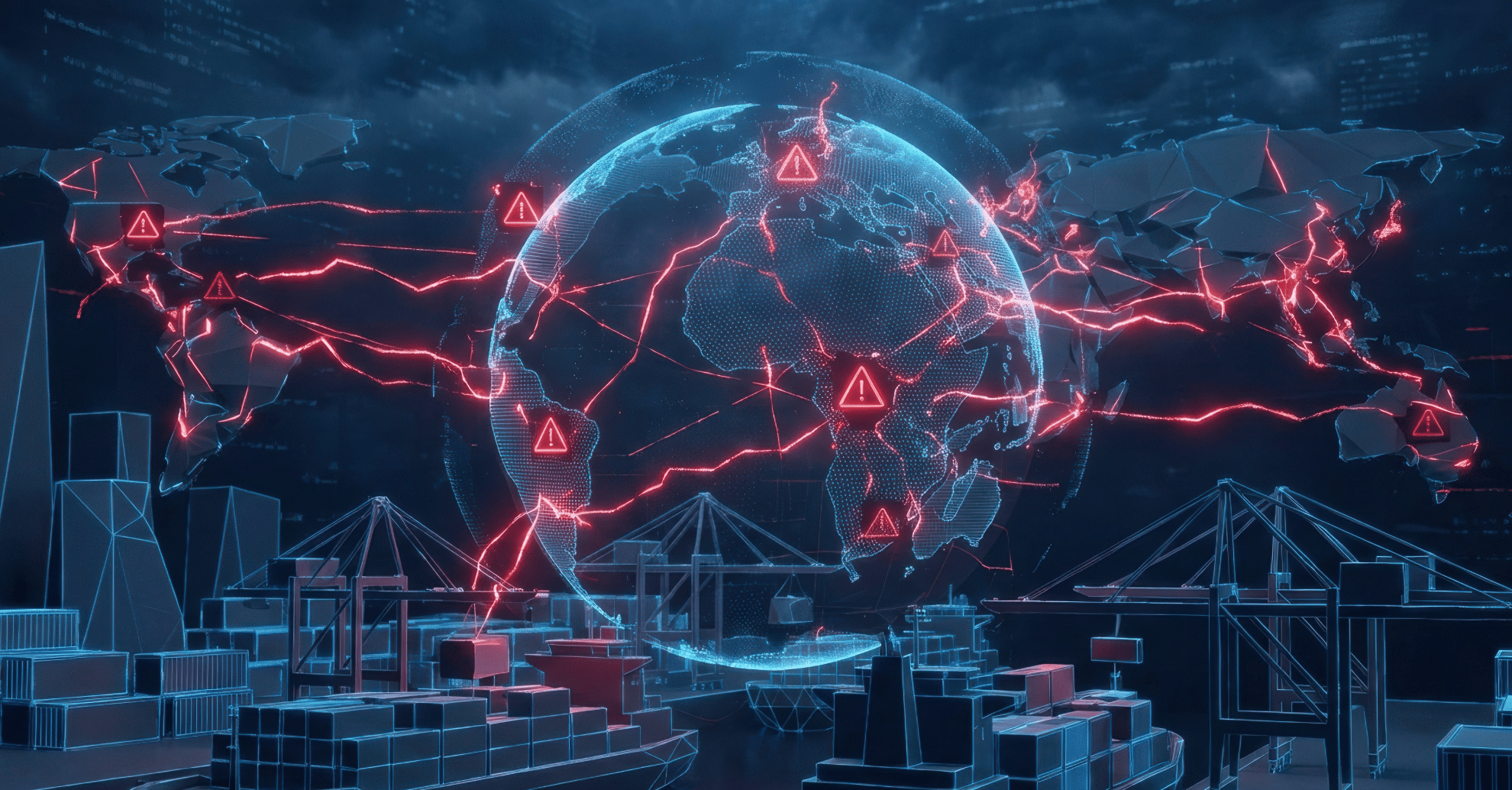
Geopolitical volatility, tariff uncertainty, regulatory shifts, and climate-related disruptions have fundamentally changed the CFO’s role. You’re no longer just reporting on what happened to the supply chain. You’re being asked to anticipate what could happen, and to have a plan.
That means the questions you’re fielding from the board have changed. It’s no longer just “what were our supply chain costs last quarter?” It’s “what’s our exposure if that Southeast Asian supplier goes down? What happens to our margins if tariffs increase 25%? How fast can we pivot?”
These are questions that require real-time intelligence, not quarterly reports.
Why Traditional Approaches Are No Longer Enough
Most supply chain technology was built for a different era, one where disruption was the exception, not the rule. Systems that rely on point-in-time data, disconnected from the rest of the business, can tell you what happened. They can’t tell you what’s about to happen.
That gap, between what you know and what you need to know, is where margin gets lost.
Consider what’s at stake: a demand forecast that’s disrupted and is off by 10% can mean millions in excess inventory or costly stockouts. A production disruption that isn’t detected in time can cascade into missed shipments, expedited freight costs, and customer attrition. Each of these events has a financial fingerprint, and most of them are preventable with the right information at the right time.
What AI-Powered Supply Chain Decision-Making Actually Means for Finance
There’s a lot of noise around artificial intelligence in supply chain. Most of it focuses on the technology. What CFOs actually need to understand is the financial scenario.
Here’s the straightforward version: AI-powered supply chain platforms don’t just process data faster. They continuously monitor live operational conditions, inventory levels, supplier lead times, demand signals, logistics constraints, and surface the decisions that matter before a problem becomes a crisis.
For finance, that translates to three things:
Fewer surprises. When your supply chain system is continuously observing and flagging risks in real time, you’re not reading about problems after the fact. You’re seeing them before they compound.
Better capital allocation. Inventory is one of the largest balance sheet items for most manufacturers and distributors. AI-driven demand forecasting and inventory optimization mean you’re holding the right inventory in the right places, not over-investing in buffer stock because your planning process is too slow to keep up with demand volatility. Consider what that looks like in practice: a mid-size consumer goods manufacturer running a 30,000-SKU portfolio discovers, through AI-driven inventory analysis, that 18% of its safety stock is concentrated in product lines where demand has been consistently over-forecast for six months. Reallocating that buffer, without any increase in stockout frequency, releases working capital directly back to the balance sheet. That’s not a supply chain outcome. That’s a finance outcome.
Faster, more confident decisions. Modern CFOs are being asked to evaluate trade-offs that didn’t exist five years ago: reshoring vs. nearshoring, just-in-time vs. strategic buffering, single-source vs. multi-source. These decisions require scenario modeling, not spreadsheets. The right platform gives you that capability, and shortens the time from question to decision.
The ROI Question
You should ask it. You should ask it early, and you should ask it specifically.
The CFOs who are getting the most out of supply chain AI investments are those who defined success criteria before they bought, not after. What does a 5% improvement in forecast accuracy mean for your inventory carrying costs? What’s the value of reducing stockout-related lost sales by 15%? What does faster scenario modeling save in decision-making time for your leadership team?
These are answerable questions. The vendors worth talking to will help you answer them, with real customer data, not hypothetical projections.
Where to Start
You don’t need to overhaul your entire supply chain technology stack to start capturing value. The most effective approach is to identify one or two high-impact use cases, demand forecasting accuracy, inventory optimization, supply disruption detection, and prove the model before you scale.
What’s your supply chain uncertainty actually costing you? That’s the right question to start with. The answer, in most cases, is more than you think.